For many engineers, an introduction to CAN bus begins with a simple setup: a microcontroller, a low-cost CAN controller, and a few examples. This approach is affordable, accessible, and effective for learning the fundamentals of CAN communication; frames, identifiers, bit rates, and basic message handling.
As projects mature, however, these early tools often struggle to keep up with real-world demands.
In this post, we’ll explore when it makes sense to move beyond hobbyist CAN tools, what differentiates professional CAN solutions, and how ATI CAN interfaces paired with CANLab provide a practical path into professional-grade CAN development.
When DIY CAN Tools Reach Their Limits
Low-cost CAN setups are ideal for experimentation, but they are rarely designed for sustained engineering work. Common limitations include:
Inconsistent behavior under higher bus load
- Limited or inaccurate timestamping
- Minimal error detection and diagnostics
- Fragile custom scripts for decoding
- Lack of long-duration logging and replay
- No formal support or validation
These challenges become critical when CAN moves from a learning exercise to a system dependency; such as during debugging, validation, reverse engineering, or customer-facing development.
What Changes at the Professional Level
Professional CAN tools are designed with reliability, observability, and repeatability in mind. Rather than focusing solely on basic frame transmission and reception, they emphasize:
- Stable, electrically robust CAN interfaces
- Precise, hardware-based timestamps
- High-performance capture and logging
- Advanced filtering and triggering
- Consistent behavior across systems and users
The goal is not just to “see traffic,” but to understand system behavior with confidence.
ATI CAN Interfaces: Built for Engineering Work
ATI CAN interfaces are designed for engineers who need dependable hardware that works consistently across long development cycles.
They provide:
- Reliable USB-to-CAN connectivity
- Clean electrical performance suitable for real networks
- Drivers intended for sustained use, not just demos
- Hardware capable of handling continuous monitoring and logging
This makes them a solid foundation for professional CAN analysis, testing, and development.
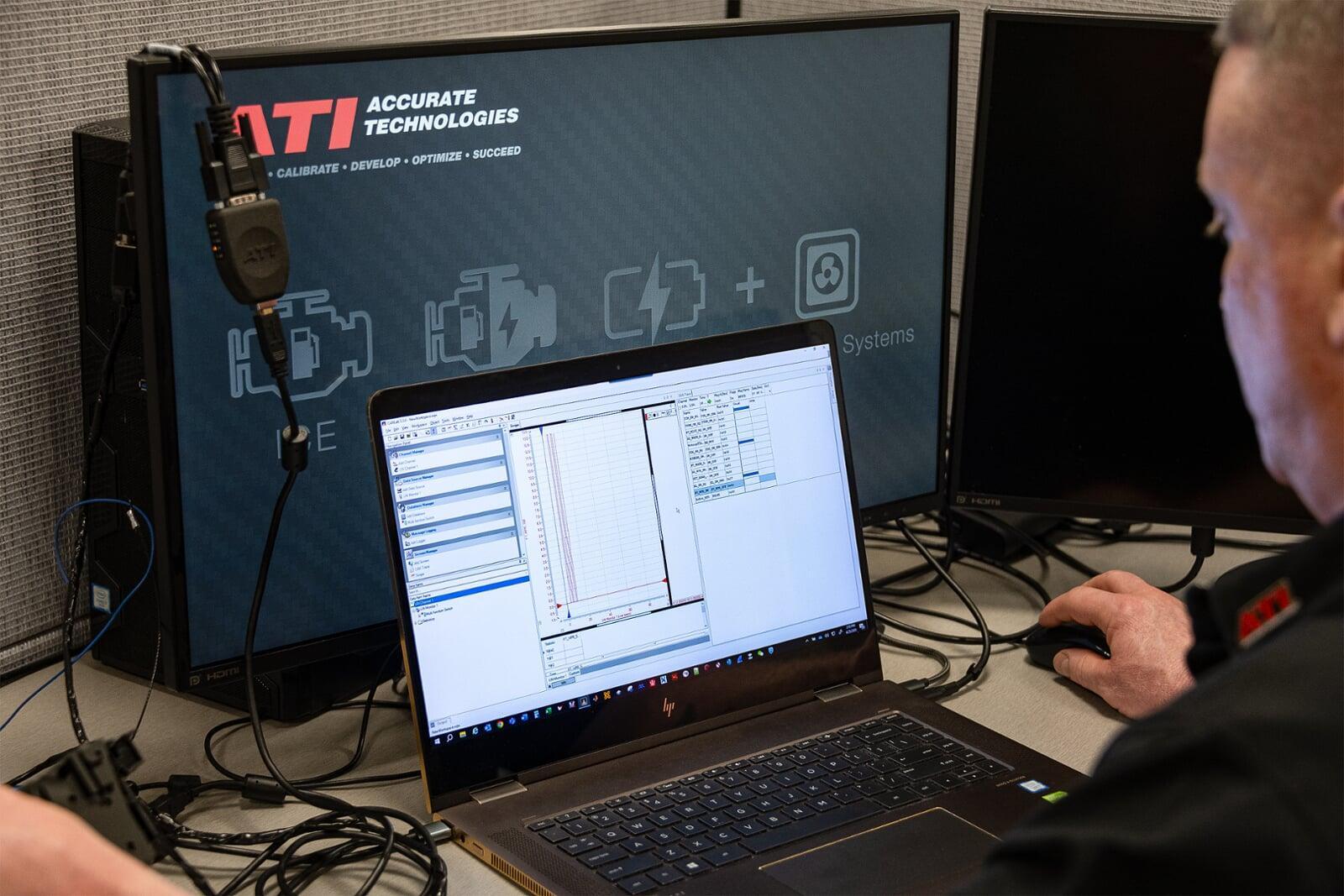
CANLab: Professional Capability Without Unnecessary Complexity
CANLab complements ATI hardware by focusing on the workflows engineers use most often.
Key capabilities include:
- Live visualization of CAN traffic
- High-speed logging for offline analysis
- Flexible filtering and triggering
- Message and signal-level decoding
- J1939 SPN decoding support
- Capture and replay for debugging and validation
Rather than attempting to cover every possible CAN-related standard, CANLab prioritizes clarity, usability, and performance, making it approachable for engineers upgrading from DIY tools while still meeting professional expectations.
Scalable Features and Practical Licensing
Not every project needs the same level of tooling. CANLab is offered in multiple variants, allowing teams to:
- Start with essential monitoring and logging
- Add advanced analysis features as requirements grow
- Align tool capabilities with project scope and budget
This scalable approach helps avoid both underpowered setups and over-engineered solutions.
Supporting Real Engineering Workflows
Professional CAN tooling must integrate smoothly into broader engineering environments. CANLab and ATI tools are designed to support:
- Repeatable testing and validation
- Clear data capture for collaboration and reporting
- Long-term use across development, Quality Assurance (QA), and support teams
- Vendor-backed support when issues arise
These considerations become increasingly important as CAN-based systems move closer to production and deployment.
From Learning Tool to Engineering Instrument
Transitioning from hobbyist CAN tools to professional solutions isn’t about discarding what you’ve learned, it’s about building on it.
If early CAN setups helped you understand how CAN works, professional tools like ATI CAN interfaces and CANLab help you understand why systems behave the way they do, and give you the confidence to act on that understanding.
At this stage, tooling stops being a constraint and becomes a critical part of successful CAN-based engineering.